

Rio de Janeiro 09-13/02
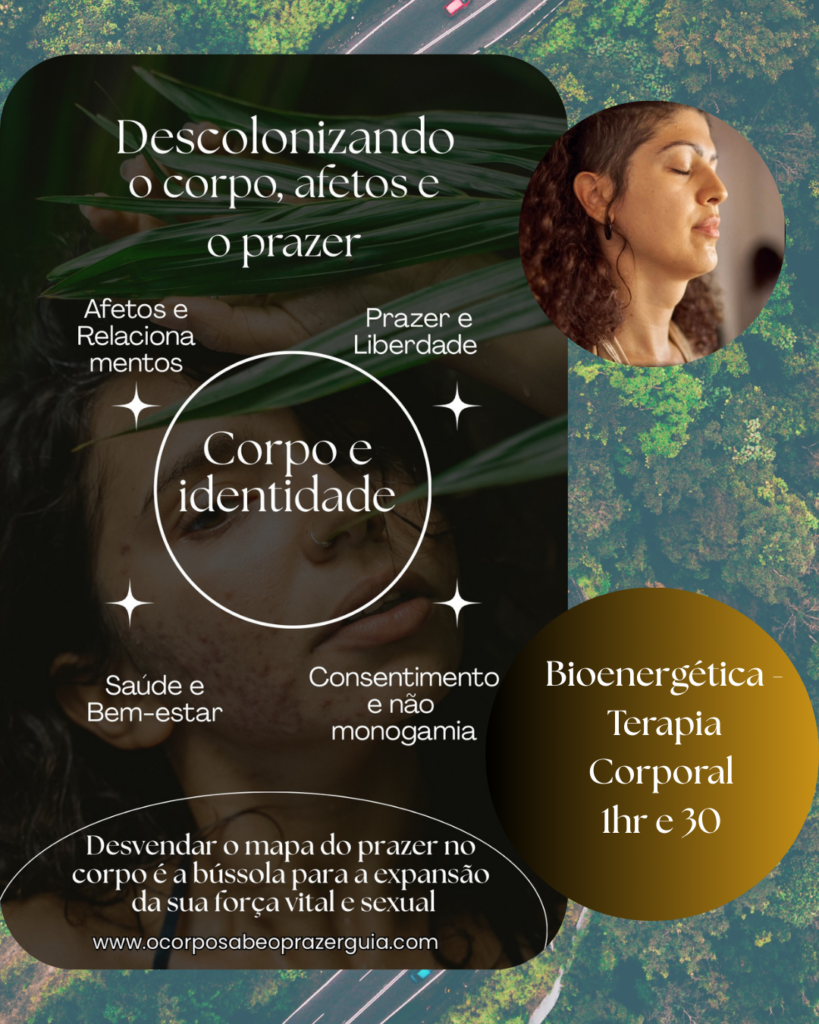

Decolonizing the body, affections, and pleasure.
Affections and relationships – non-monogamy (beyond Eurocentric norms)
Unveiling your pleasure map throughout your body, beyond just the genitals, is the compass for expanding your vital and sexual energy.
Decolonizing the body, affections, and pleasure is an invitation to remember what was never truly lost—only silenced. It is a process of unlearning the rigid, Eurocentric frameworks that taught us to fragment ourselves: body separate from spirit, pleasure restricted to genitals, love confined to ownership, and affection regulated by fear, control, and hierarchy.
To decolonize the body is to return it to its original intelligence. Before being disciplined, moralized, or reduced to productivity, the body was a living territory of sensation, intuition, and wisdom. It knew how to feel, to rest, to desire, to connect. Decolonization invites us to listen again—to notice how pleasure moves through breath, skin, voice, spine, belly, feet, and heart. Pleasure is not an endpoint; it is a language. When we unveil our personal pleasure map, we reclaim pleasure as a compass that expands vital energy, creativity, and erotic aliveness throughout the entire body, not just the genitals.
Affections, too, require decolonization. Many of us inherited relational models rooted in scarcity, possession, and control—often framed as “love.” Non-monogamy, when approached consciously, is not simply about having multiple partners; it is about questioning norms that privilege exclusivity over honesty, ownership over responsibility, and silence over communication. It opens space to explore relationships as living agreements rather than fixed contracts, where consent, care, and emotional literacy are central.
Decolonizing relationships means recognizing that love and desire are not limited resources. It means honoring multiple forms of intimacy—sexual, emotional, creative, spiritual—without ranking them through moral hierarchies. It also means taking responsibility for how our choices impact others, practicing clear communication, and cultivating boundaries that protect everyone involved.
At the intersection of body, affection, and pleasure lies liberation. When pleasure is allowed to circulate freely through the body, it nourishes self-trust. When affections are expressed without shame, they create authenticity. When relationships are freed from colonial norms, they become spaces of growth rather than confinement.
To decolonize is not to reject everything, but to choose consciously. It is to remember that the body is not something to control, but a guide. Pleasure is not a distraction, but a source of power. And relationships are not cages, but ecosystems—alive, dynamic, and capable of sustaining more truth, more freedom, and more love.